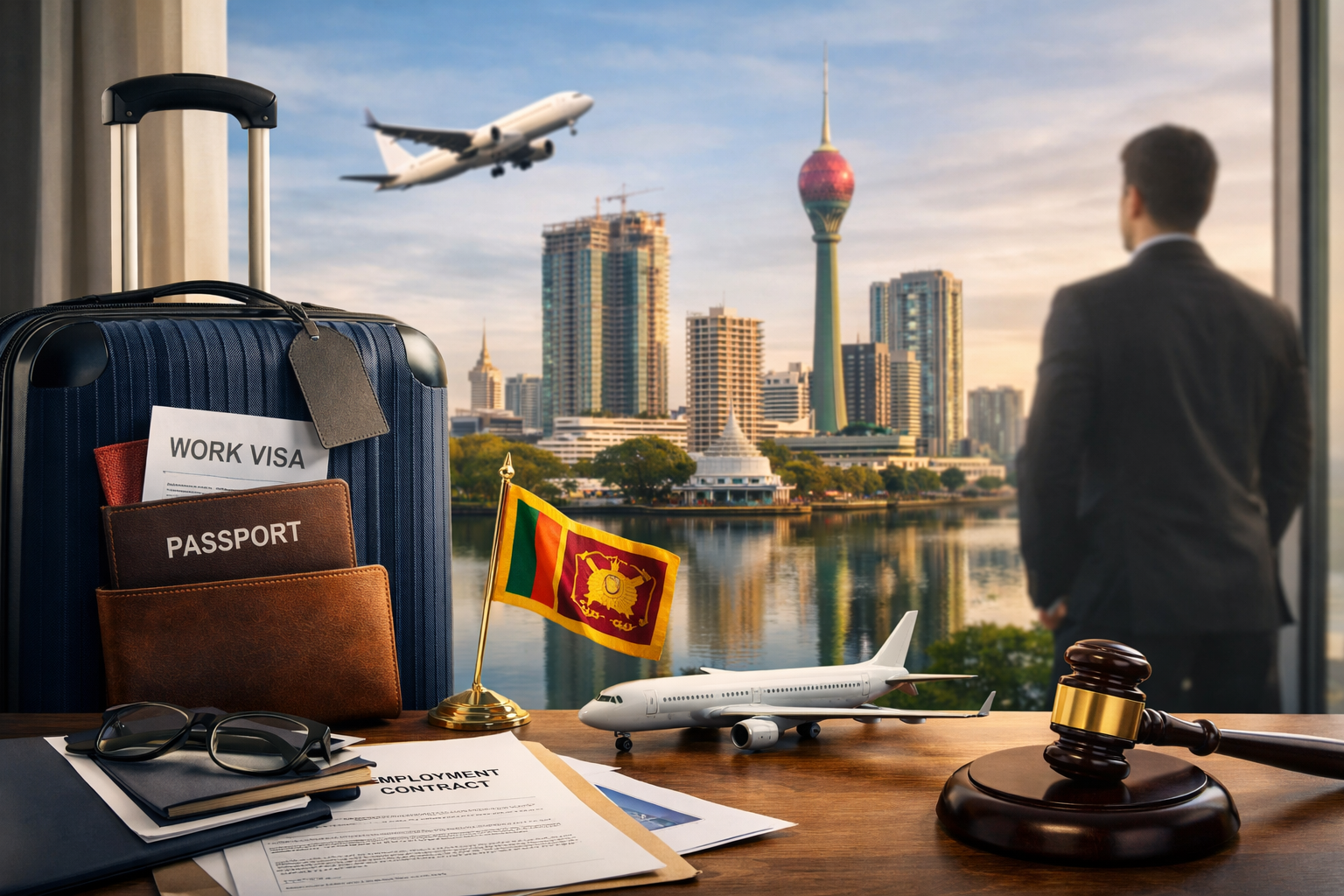
For international companies expanding into Sri Lanka, hiring foreign nationals locally often involves more than simply issuing an employment contract.
Employers must also navigate:
- work visa requirements
- employment permit approvals
- immigration compliance
- sponsorship obligations
- local regulatory procedures
In practice, many foreign companies underestimate how operationally detailed Sri Lanka’s corporate immigration process can become—particularly when relocating senior staff, technical specialists, regional managers, or long-term foreign employees into the country.
Understanding the work visa and employment permit process early is essential for avoiding:
- onboarding delays
- compliance issues
- visa rejections
- administrative disruption during expansion
This guide explains how Sri Lanka’s employment visa process works, the responsibilities of sponsoring employers, key compliance considerations, and why many international companies use local employment and immigration partners when hiring foreign nationals in Sri Lanka.
Do Foreign Employees Need a Work Visa in Sri Lanka?
Yes.
Foreign nationals intending to work in Sri Lanka generally require:
- an appropriate residence visa
- employment approval
- immigration authorisation permitting work activities within the country
Tourist visas do not legally authorise long-term employment activities in Sri Lanka.
For overseas companies, this distinction is particularly important because improper visa arrangements can create:
- immigration complications
- compliance exposure
- operational disruption for both the employer and employee
In practice, foreign employees working in Sri Lanka usually require:
- employer sponsorship
- supporting corporate documentation
- approval through Sri Lankan immigration authorities
What Is a Sri Lanka Work Visa?
In Sri Lanka, foreign employees commonly work under a Residence Visa with employment approval.
These visas are generally issued for foreign nationals employed by:
- Sri Lankan companies
- registered foreign businesses
- BOI-approved entities
- NGOs
- diplomatic organisations
- approved commercial operations
The visa structure usually depends on:
- the employer’s legal status
- the employee’s role
- industry sector
- duration of employment
Difference Between a Work Visa and Employment Permit
International employers often use the terms interchangeably, but operationally they are slightly different.
Employment Approval / Work Authorisation
This refers to approval allowing the foreign national to work legally in Sri Lanka.
Residence Visa
This is the immigration permission allowing the individual to reside in Sri Lanka for employment purposes.
In practice, both processes are closely linked and generally handled together during corporate immigration procedures.
Which Foreign Employees Typically Require Work Visas?
Work visas are commonly required for:
- senior management
- technical specialists
- consultants
- project managers
- regional directors
- engineers
- foreign operational staff relocating into Sri Lanka
Companies frequently sponsor visas for employees involved in:
- technology projects
- infrastructure operations
- manufacturing
- hospitality
- international development
- regional business management
Can Foreign Companies Sponsor Work Visas Without a Sri Lankan Entity?
Usually, a sponsoring structure within Sri Lanka is required.
In most cases, the sponsoring organisation must be:
- a registered Sri Lankan company
- a branch office
- a BOI-approved entity
- another authorised local organisation
This creates challenges for overseas businesses that want to relocate employees into Sri Lanka before establishing local operations fully.
As a result, many international companies work with:
- local employment partners
- Employer of Record (EOR) providers
- local corporate service providers
during early-stage expansion.
Common Work Visa Categories in Sri Lanka
The appropriate visa category depends on:
- employment structure
- business activity
- the employee’s intended role
Employment Residence Visa
This is the most common route for foreign employees working in Sri Lanka long term. It is generally used for:
- foreign executives
- technical staff
- consultants
- operational employees
Applications usually require:
- employer sponsorship
- corporate documentation
- passport documentation
- employment justification
- immigration approval
BOI-Sponsored Employment Visas
Companies operating under the Board of Investment (BOI) framework may follow separate immigration procedures depending on project approvals and investment structures.
BOI-linked companies often receive:
- streamlined processing support
- project-based immigration facilitation
- operational approvals for foreign personnel
Short-Term Business and Project Visas
Some foreign nationals entering Sri Lanka for:
- temporary projects
- training
- meetings
- limited-duration assignments
may use alternative business visa arrangements depending on activity type.
However, employers should avoid assuming short-term business visas automatically permit operational employment activities. This is an area where companies frequently create compliance risk unintentionally.
Sri Lanka Work Visa Process – Step by Step
Although procedures vary depending on the company structure and visa type, the process usually follows several stages.
Step 1 – Establish Sponsoring Entity
The sponsoring organisation generally must:
- operate legally within Sri Lanka
- maintain corporate registrations
- provide supporting documentation for the foreign employee
This may involve:
- company incorporation
- BOI registration
- branch registration
- local sponsorship arrangements
For overseas businesses without local infrastructure, this stage often becomes the biggest operational hurdle.
Step 2 – Prepare Supporting Documentation
Typical documentation may include:
- passport copies
- employment contracts
- educational qualifications
- CVs
- corporate registration documents
- tax registration documents
- employer sponsorship letters
Depending on the industry and visa category, additional approvals may also be required.
In practice, documentation quality and consistency play a major role in avoiding processing delays.
Step 3 – Submit Immigration Application
Applications are generally submitted through the relevant Sri Lankan immigration authorities or approved administrative channels.
Processing timelines may vary depending on:
- visa category
- supporting documentation
- government processing volumes
- regulatory approvals
Because procedures can change periodically, many companies rely on local immigration support partners to manage submission workflows more efficiently.
Step 4 – Visa Approval and Issuance
Once approved:
- the employee receives immigration authorisation
- residence permissions
- employment-related visa approval
Visa duration often depends on:
- employment structure
- project duration
- corporate sponsorship arrangements
Step 5 – Ongoing Compliance and Renewals
Work visa compliance does not end after approval.
Employers may also need to manage:
- renewals
- immigration reporting
- address updates
- employment status changes
- supporting documentation maintenance
Poor renewal management is one of the most common operational issues foreign companies encounter.
How Long Does a Sri Lanka Work Visa Take?
Processing timelines vary depending on:
- visa type
- corporate structure
- documentation quality
- government approvals
In practice, timelines may range from:
- several weeks
- to significantly longer for complex cases or incomplete submissions
Businesses planning relocation projects should account for potential administrative lead time when scheduling employee onboarding.
Common Challenges Foreign Employers Face
International companies entering Sri Lanka often encounter similar immigration and compliance issues.
Delays Caused by Incomplete Documentation
One of the most common problems is:
- inconsistent paperwork
- incomplete employer documentation
- unclear employment justification
Immigration applications often move significantly faster when documentation is prepared correctly from the beginning.
Assuming Tourist Visas Permit Employment
Some employers incorrectly assume foreign nationals can begin working under:
- tourist visas
- short-term business entry arrangements
Improper visa usage can create:
- immigration complications
- reputational risk
- operational disruption
Lack of Local Sponsorship Infrastructure
Foreign companies without a Sri Lankan entity frequently struggle with:
- sponsorship requirements
- payroll setup
- local compliance administration
This is one reason many international employers initially work with local EOR and corporate services partners during expansion.
Poor Renewal Management
Visa renewals require ongoing monitoring and administrative coordination.
Missed deadlines may create:
- immigration compliance issues
- employment disruption
- operational delays
Why Many Companies Use Local Employment and Immigration Partners
For overseas businesses unfamiliar with Sri Lankan immigration procedures, local support can significantly simplify the process.
Experienced local partners can often assist with:
- sponsorship coordination
- employment setup
- payroll administration
- immigration workflows
- compliance documentation
- onboarding support
This becomes especially valuable for companies:
- relocating senior personnel
- managing regional operations
- building long-term Sri Lankan teams
In practice, many international companies underestimate how interconnected:
- payroll
- immigration
- employment contracts
- statutory compliance
become during foreign employee onboarding.
Employer of Record (EOR) Support for Foreign Hiring in Sri Lanka
In some situations, an Employer of Record (EOR) structure may help simplify aspects of international employment administration in Sri Lanka.
An EOR can typically support:
- local employment infrastructure
- compliant onboarding
- payroll administration
- statutory compliance
- HR administration
For businesses entering Sri Lanka without a fully established local entity, this can reduce:
- operational complexity
- onboarding delays
- administrative overhead during expansion
This is particularly useful for:
- early-stage market entry
- project-based expansion
- international companies testing long-term operations in Sri Lanka
Compliance Considerations for Foreign Employers
International companies sponsoring employees in Sri Lanka should also consider:
- payroll obligations
- EPF and ETF compliance
- employment contracts
- tax considerations
- labour law requirements
Immigration approval alone does not remove the need for proper local employment compliance.
For example, foreign employees working under local payroll structures may still require:
- compliant salary administration
- payroll registration
- statutory contribution handling depending on employment arrangements
Tax and Permanent Establishment Considerations
Foreign employers relocating staff into Sri Lanka should also assess:
- permanent establishment (PE) exposure
- local tax implications
- operational structuring risks
Factors influencing PE exposure may include:
- management activity
- local revenue generation
- operational control
- duration of business presence
Because tax exposure depends heavily on business structure and treaty arrangements, professional tax advice is strongly recommended before establishing significant operations in Sri Lanka.
Industries Frequently Sponsoring Foreign Employees in Sri Lanka
Foreign employee sponsorship is relatively common in sectors such as:
- technology
- manufacturing
- hospitality
- infrastructure
- international development
- construction
- regional business operations
Companies typically sponsor foreign personnel when:
- specialised expertise is required
- regional oversight is needed
- project leadership must be relocated locally
Why Immigration Planning Matters During Expansion
Many companies focus heavily on recruitment but underestimate:
- immigration timelines
- documentation requirements
- local employment compliance obligations
In practice, delayed visa approvals can disrupt:
- project schedules
- onboarding
- operational planning
- workforce scaling
Early planning significantly reduces these risks.
Experienced local support can also help businesses avoid common administrative mistakes that delay foreign employee onboarding unnecessarily.
Frequently Asked Questions
Do foreign employees need a work visa in Sri Lanka?
Yes. Foreign nationals generally require appropriate residence and employment authorisation to work legally in Sri Lanka.
Can a foreign company sponsor a work visa without a Sri Lankan entity?
In most cases, a local sponsoring structure is required. Many overseas businesses therefore work with local partners or Employer of Record providers during early-stage expansion.
How long does a Sri Lanka work visa take?
Processing timelines vary depending on:
- visa category
- employer structure
- documentation quality
- regulatory approvals
In practice, processing may take several weeks or longer.
Can employees work in Sri Lanka on a tourist visa?
Tourist visas generally do not authorise long-term employment activities in Sri Lanka.
What documents are usually required for a Sri Lanka work visa?
Common documentation may include:
- passport copies
- employment contracts
- educational qualifications
- employer sponsorship letters
- corporate registration documents
Final Thoughts
Sri Lanka continues to attract international companies seeking to build regional operations, relocate specialists, and access skilled professional talent within South Asia.
However, successfully hiring and relocating foreign employees into Sri Lanka requires more than simply issuing an employment contract. Employers must also manage:
- immigration approvals
- sponsorship requirements
- payroll administration
- employment compliance
- ongoing visa management
For many overseas companies, the challenge is not identifying talent—it is navigating Sri Lanka’s operational and regulatory requirements efficiently without creating unnecessary administrative delays or compliance exposure.
That is why many international businesses expanding into Sri Lanka choose to work with experienced local employment and immigration partners rather than attempting to manage the process independently.
ExroAsia helps international employers manage compliant hiring, onboarding, payroll administration, Employer of Record (EOR) support, and employment infrastructure in Sri Lanka for overseas businesses expanding into the region.
With Sri Lanka-specific operational expertise, dedicated regional HR support, and experience supporting international workforce expansion, ExroAsia enables companies to scale operations in Sri Lanka with significantly lower administrative burden and greater compliance confidence.
If your company is planning to relocate staff or hire employees in Sri Lanka, speak with ExroAsia about Employer of Record, payroll, and international workforce solutions tailored for global employers expanding into South Asia.
Comments